

Panch Mukhi Rudraksha Mala — 108+1 Beads


Panch Mukhi Rudraksha Mala — 108+1 Beads
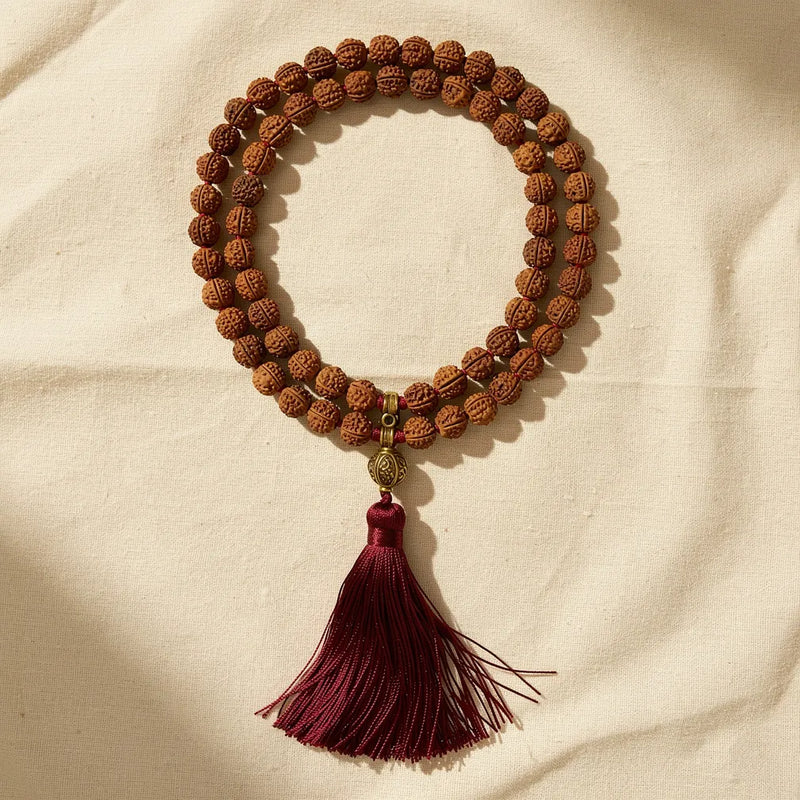
The mala that begins most journeys. 108+1 authentic five-mukhi rudraksha beads from the hills of Nepal, hand-knotted by artisans — worn for calm, carried for practice.
108+1 beads, 7–8mm · Nepal origin · Hand-knotted cotton cord · Maroon tassel
Lab-certified with QR-verified batch report. Energised with intention, not marketing.
The story: the seed of Shiva
Rudraksha means "the eye of Rudra" — a name for Shiva. The bead is not a stone but a seed: the dried fruit-pit of the Elaeocarpus tree that grows in the Himalayan foothills of Nepal and parts of India and Southeast Asia. For centuries, seekers, sadhus and householders alike have strung these seeds into malas — 108 beads and one guru bead — as companions for japa, the meditative repetition of a mantra. The tradition holds the rudraksha dear to Shiva; the natural lines that divide each bead, called mukhis, give each type its own character and association.
Why five mukhi?
The five-faced rudraksha is the most naturally abundant and the most universally worn — tradition associates it with Kalagni Rudra, a form of Shiva, and with clarity, calm and general wellbeing. It is considered suitable for everyone: any age, any gender, any stage of practice. If you're beginning, this is where the tradition itself would point you.
How to recognise the real thing
An authentic rudraksha has a knobby, tubercled surface — like a tiny walnut shell — with deep natural furrows running from crown to base. Five furrows means five mukhi. Fakes are often smooth, unnaturally uniform, or carved from wood. You shouldn't have to squint and guess: every Salico mala ships with a lab certificate carrying a QR code that links to its batch test report, so you can verify independently of us.
Features
- Beads: 108+1 five-mukhi rudraksha, 7–8mm, Nepal origin
- Knotting: hand-knotted between beads on natural cotton cord — traditional, and it protects beads from rubbing
- Guru bead & tassel: one larger 109th bead with deep maroon cotton tassel
- Certification: accredited-lab batch testing, QR-verified report in every box
- Energisation: prepared with care and intention — never charged as an extra, never sold with promised outcomes
- In the box: mala, certificate, care & ritual guide, cotton pouch
Which mukhi is for me?
| Bead | Tradition associates with | Best for |
|---|---|---|
| 5 Mukhi (this mala) | Calm, clarity, wellbeing | Everyone — the universal first rudraksha |
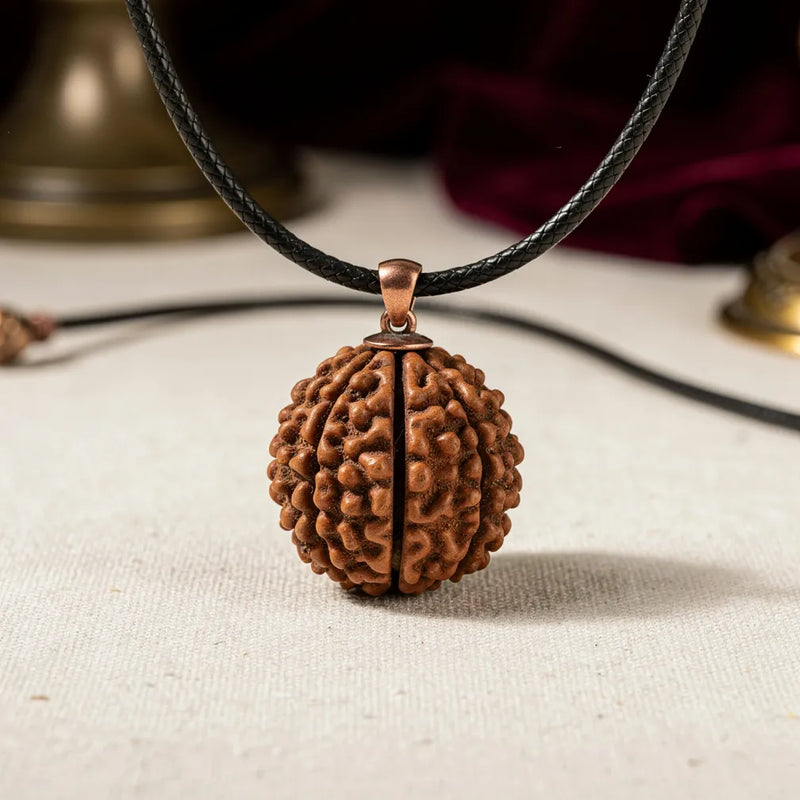
| 6 Mukhi | Focus, discipline, learning | Students and builders of craft |
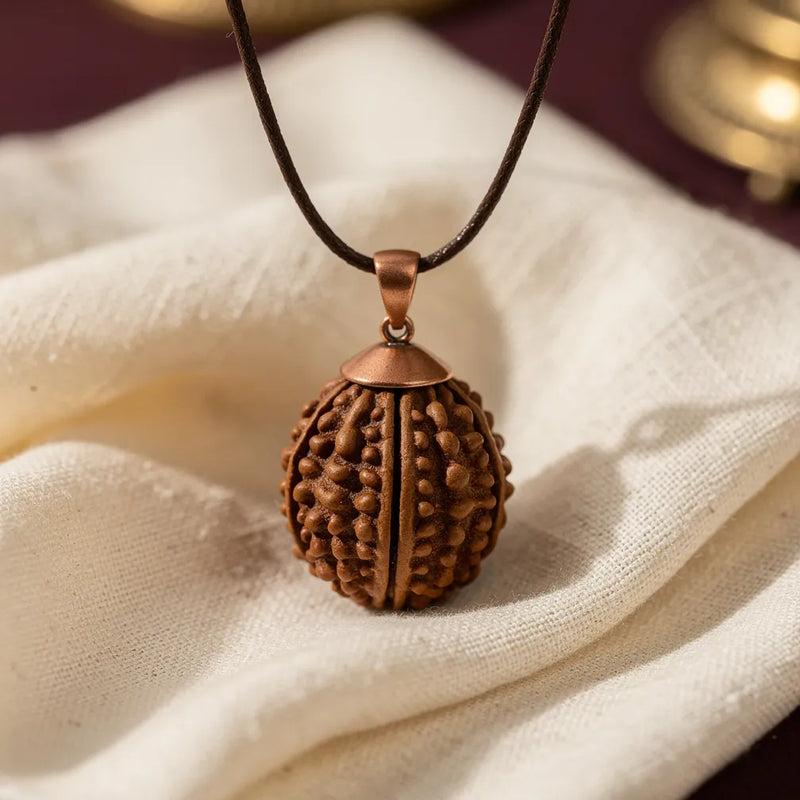
| 7 Mukhi | Abundance (Mahalakshmi) | Those building livelihood or business |
Wearing & care
Wear it around the neck or wrapped at the wrist; use it for japa by turning one bead per repetition, beginning beside the guru bead. Keep it dry — remove before bathing or swimming. Wipe occasionally with a soft dry cloth; a drop of natural oil once a season keeps the beads nourished. Many practitioners rest the mala at their altar overnight.
Questions, answered honestly
Will it bring me specific results? We won't promise that — no one honestly can. Tradition associates the five mukhi with calm and clarity; what it reliably brings is a daily anchor for your own practice.
Can women wear rudraksha? Yes. The five mukhi is traditionally considered suitable for all.
Is it really from Nepal? Yes — origin is stated on the certificate, and the batch report is verifiable via QR.
What if a bead cracks or the cord wears? Our Care & Sizing Kit covers re-threading at home, and our support is a WhatsApp message away.
Product images are representative; certified product photography is on its way.
Everything you'd want to know before you wear it
The story behind this piece, how to recognise the real thing, and how to care for it — told honestly, the Salico way.
The seed of Shiva, from the hills of Nepal
Not a stone — a seed. Rudraksha, 'the eye of Rudra,' grows on Elaeocarpus trees in the Himalayan foothills, strung and worn by seekers for centuries. Its natural faces — the mukhis — give each bead its own traditional character.

Know what real looks like
Smooth, uniform or carved beads are the common fakes — the real seed is proudly irregular.

Which piece is for you?
 Panch Mukhi Rudraksha Mala — 10...The Seeker · calm & clarity
 Chhe Mukhi Rudraksha Pendant — ...The Student · focus & learningView →
 Saat Mukhi Rudraksha Pendant — ...The Builder · abundanceView →